Here is Where Database Reactivation Works Best in Australia
From Sydney's competitive metro markets to Tasmania's tourism-dependent economy, database reactivation delivers results across Australia. But the approach that works in Perth won't necessarily work in Adelaide. Here's how to tailor your strategy to local conditions.

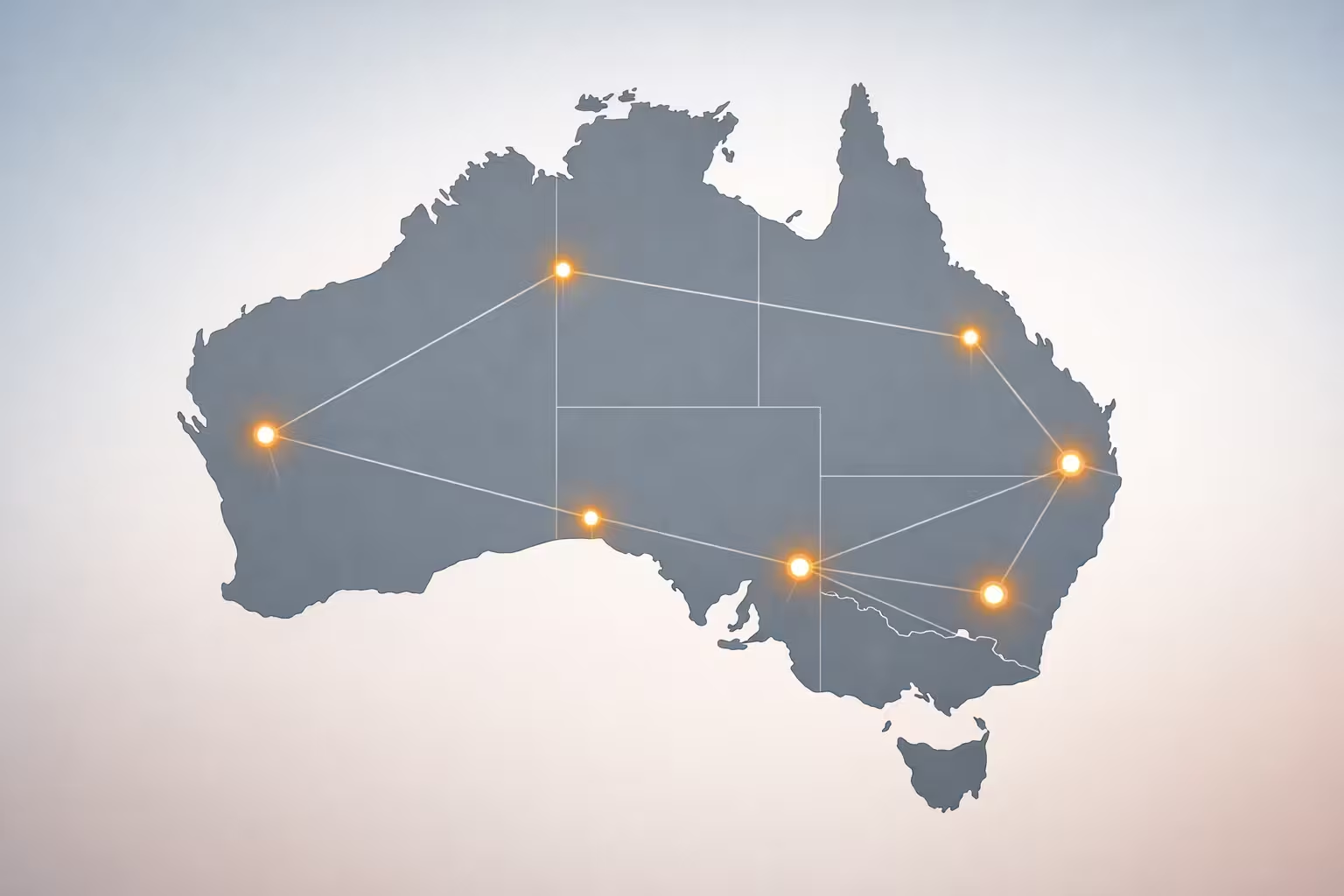
Database reactivation isn't just for Sydney and Melbourne. Every state and territory in Australia has dormant customers worth reactivating, but the approach varies based on local business characteristics.
Australian business data shows 2.66 million actively trading businesses nationwide as of June 2024, with each region facing unique challenges and opportunities. Here's how database reactivation delivers results across the country.
2.66M
Active Australian businesses
5-10x
Cost advantage vs acquisition
8
States and territories covered
New South Wales: Where Scale Meets Opportunity
NSW operates 896,485 businesses, more than any other state or territory. With the highest business density per capita (0.105 per person), competition forces customer turnover.
Why reactivation works here: High customer acquisition costs in competitive metro markets make reactivation 5-10x more cost-effective than new acquisition. Sydney's retail, professional services, and hospitality sectors face constant churn. Businesses that ignore dormant databases leave revenue on the table while competitors spend heavily on acquisition.
Best targets: Professional services firms with project-based work, retail businesses in high-rent districts, restaurants in competitive precincts, and B2B companies serving Sydney's corporate market.
Victoria: Service Economy Powerhouse
Victoria added 18,503 businesses in 2024, driven by strong financial services, healthcare, and transport sectors. Melbourne's service economy creates long sales cycles and relationship-based business models.
Why reactivation works here: Service businesses build relationships that go dormant but rarely die completely. A customer who stops using your accounting firm or hasn't booked your consulting services in 18 months still knows and trusts you. Reactivation campaigns in Victoria achieve 25-35% response rates when targeting relationship-based services.
Best targets: Professional services, healthcare providers, financial advisors, B2B software companies, and subscription-based businesses serving Melbourne's corporate sector.
Queensland: Tourism Recovery and Business Migration Magnet
Queensland leads business migration with 1,380 net inflows from other states in 2024. The tourism sector is rebounding strongly, with 95% of tourism businesses classified as small enterprises.
Why reactivation works here: Tourism and hospitality businesses face extreme seasonality. Customers who visited once may have forgotten to return. With international tourism forecast to exceed 2019 levels in 2026, reactivating past visitors costs less than acquiring new ones from crowded marketing channels.
Best targets: Hotels and resorts, tour operators, restaurants in tourist areas, retail businesses on the Gold Coast and Sunshine Coast, and any business serving seasonal visitors.
Western Australia: Resource Economy with Spending Power
WA leads Australia's economic performance for the fifth consecutive quarter, topping four of eight economic indicators. Household spending sits 14.8% above long-term averages.
Why reactivation works here: Mining sector prosperity creates high customer lifetime values. When customers go dormant in WA, you're not losing $50 purchases, you're losing $500+ transactions. The opportunity cost of ignoring dormant databases multiplies in high-value markets.
Best targets: Premium retailers, luxury goods and services, property services, automotive dealers, and B2B suppliers serving mining companies and their employees.
South Australia: Growing Economy, Tight Margins
SA's economy grew 8.7% above long-run averages, leading the nation in economic growth. Yet small businesses operate on tighter margins than resource-rich states.
Why reactivation works here: Cost efficiency matters more in SA. When customer acquisition costs $100-150 per customer and reactivation costs $10-20, the math becomes compelling. Adelaide businesses can't afford to waste dormant databases when acquisition budgets are limited.
Best targets: Wine tourism operators, manufacturing suppliers, agricultural businesses, Adelaide retail and hospitality, and regional businesses with limited marketing budgets.
Tasmania: Tourism-Dependent, Relationship-Focused
Tasmania's business landscape centers on tourism and agriculture. Tourism accounts for 1 in 7 Australian businesses nationwide, with Tasmania's economy particularly dependent on visitor spending.
Why reactivation works here: Island tourism creates "bucket list" visitors who planned their trip carefully. These aren't impulse tourists; they're motivated travelers who loved their experience. Reactivating them for return visits or referrals requires less marketing spend than finding new visitors who've never heard of you.
Best targets: Accommodation providers, food and wine experiences, tour operators, artisan producers, and any business serving mainland tourists.
Northern Territory: High-Value Tourism, Harsh Conditions
NT jumped from eighth to fourth place in economic rankings, its best result since October 2016. However, business survival rates remain Australia's lowest at 49% beyond three years.
Why reactivation works here: Low survival rates mean businesses that do survive need every advantage. International tourists visiting Uluru or Kakadu spend more than domestic travelers. Reactivating past international visitors (especially those from repeat-visitor markets like Asia) delivers outsized returns.
Best targets: Tour operators, accommodation near national parks, indigenous tourism experiences, and businesses serving fly-in corporate clients in mining towns.
Australian Capital Territory: Government Sector Meets Growth
ACT achieved 3.5% business growth in 2024, the highest rate nationally. Government contractors and professional services dominate, creating complex B2B relationships.
Why reactivation works here: Government contracting follows award cycles. A customer who went dormant after contract completion isn't lost; they're between projects. Reactivation campaigns timed to new tender periods achieve 40%+ response rates because you're reaching out when they need you again.
Best targets: Government contractors, professional services firms, IT and consulting businesses, and any B2B company serving the public sector.
Key Takeaway
Despite regional differences, reactivation costs 5-10x less than acquiring new customers everywhere. This advantage compounds in high-cost metro markets and resource-constrained regional areas alike.
What Makes Database Reactivation Work Everywhere
Despite regional differences, three factors make reactivation successful nationwide:
Cost advantage: Reactivating costs 5-10x less than acquiring new customers, regardless of location. This advantage compounds in high-cost metro markets and resource-constrained regional areas alike.
Built-in qualification: Dormant customers already know your brand, understand your value, and chose you once. You're not starting from zero. This matters equally whether you're in Sydney or Hobart.
Untapped revenue: Most Australian businesses focus entirely on acquisition while sitting on databases full of customers who'd return with the right approach. Your competitors are making this mistake. You don't have to.
Where to Start
Database reactivation works everywhere, but your approach should reflect local characteristics:
| Market Type | States/Regions | Recommended Approach |
|---|---|---|
| Metro markets | Sydney, Melbourne, Brisbane | Personalisation and strong offers to stand out |
| Resource states | WA, NT, QLD | Premium value focus, less discount-heavy |
| Service economies | VIC, ACT, NSW | Relationship history and past work references |
| Tourism regions | QLD, TAS, SA, NT | Time campaigns to travel seasons and events |
| Cost-conscious markets | SA, TAS, regional areas | Lead with ROI and concrete value |
Your dormant database works everywhere in Australia. The question isn't whether it will deliver results; it's whether you'll activate it before your competitors do.
This article is provided for general informational purposes only and does not constitute professional, financial, or legal advice. No guarantees are made regarding the accuracy, completeness, or suitability of the information. Results may vary based on your circumstances, the quality of any data used, and how campaigns or strategies are executed. The authors and publisher disclaim any liability for any direct or indirect losses arising from its use.
Ready to Reactivate Your Database?
Get a free audit of your existing contacts. We'll show you how many are reactivatable and what results you could expect. Learn more about our process.
Get Your Free AuditTopics covered:
Ben Sabic is a Chartered Marketer with over a decade of experience in marketing and communications.
Visit website